
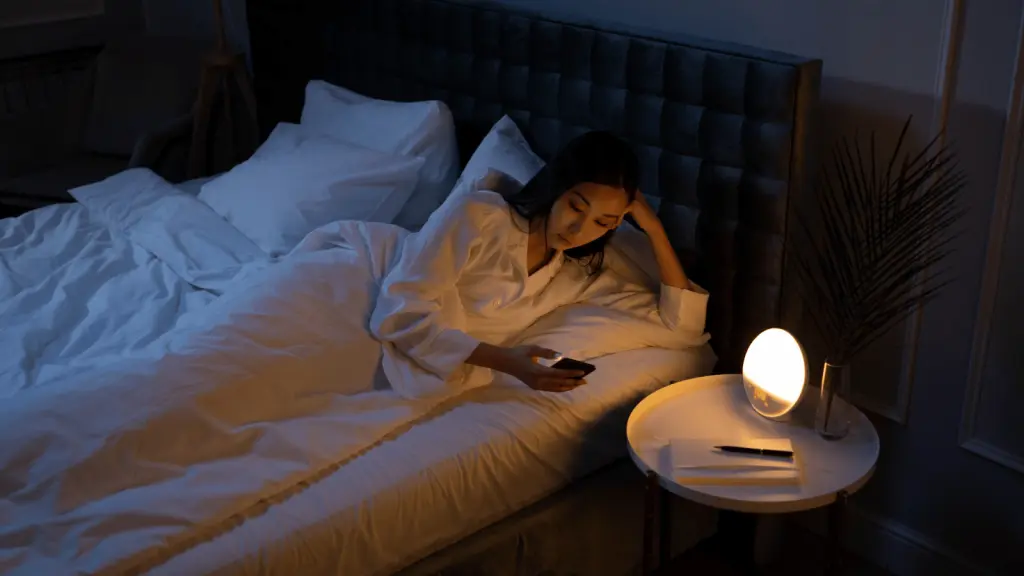

There is a number worth pausing on. A 2025 survey by the American Academy of Sleep Medicine reported that a meaningful share of Americans sleep apart from their partner at least some nights. A 2026 analysis of about 1,420 adults in Brazil, led by Luciano F. Drager and Barbara K. Parise and presented at the American Thoracic Society conference, found that roughly one in six couples slept in separate rooms at least part of the time.
The arrangement is often called a sleep divorce. The term makes it sound like a symptom of a struggling relationship. The research points somewhere more nuanced: for some couples it may be a practical response to a problem, poor sleep, that was quietly wearing the relationship down long before anyone named it. The evidence is mixed rather than settled, and what helps one couple will not suit another.
The problem was rarely the shared bed itself
Wendy Troxel, PhD, a behavioral sleep scientist at the RAND Corporation who has spent her career studying sleep in couples, points to something counterintuitive. When sleep is measured in a lab, people often sleep worse next to a partner than they do alone. Movement, snoring, and mismatched body clocks can all fragment sleep, even when both partners say they feel more secure sharing a bed.
Troxel’s research on couples suggests that when partners are asleep and awake at roughly the same times, relationship satisfaction tends to be higher. At the same time, mismatched schedules are linked to more conflict. In other words, the bed itself may not be the variable that matters most. What tends to matter is whether both people are actually getting rest.
That distinction reframes what a sleep divorce is trying to solve. What erodes closeness is often two exhausted people trying to stay patient, present, and interested in each other on very little sleep.
What can poor sleep do to a couple?
The mechanism is not mysterious. It is hard to stay patient during a difficult conversation, or to interpret a partner’s tone generously, on a few hours of broken sleep. A companion piece on this blog, How to Strengthen Your Relationship: 12 Evidence-Based Habits of Couples Who Last, covers the daily habits that keep couples connected, and rest sits underneath most of them.
There is a sharper version of this finding from UC Berkeley’s Center for Human Sleep Science. In research led by Eti Ben Simon and Matthew Walker, published in Nature Communications in 2018, sleep-deprived people were measurably less willing to engage with others. They kept people at greater physical distances in controlled experiments and were rated by observers as less socially approachable. The effect also ran in both directions: time spent with a sleep-deprived person left well-rested people feeling lonelier too.
Applied to a bedroom, that is not a small finding. Chronically under-slept partners may feel less inclined toward the very behaviors that keep a relationship feeling like one, reaching over, starting a conversation, or staying present during intimacy. Left unaddressed, that can drift toward what many couples describe as roommate syndrome.
Does sleeping apart cost a couple intimacy?
It can, if closeness is left to happen only by proximity. Couples who separate their sleep and then let intimacy quietly disappear along with the shared bed are treating sleep separation as the whole answer rather than a first step.
Intimacy that used to happen by accident, a hand on a back at midnight, a half-asleep conversation, may need to become something a couple chooses on purpose. In practice, that can look like:
– A set time to wind down together before one partner moves rooms.
– A standing night each week in the same bed, planned rather than left to chance.
– Treating the morning, rather than midnight, as the default window for touch and conversation.
A note on the evidence: not every study points the same way. A 2025 study of about 860 older couples in Northern Taiwan, published in BMC Public Health, found that sleeping in separate rooms was associated with lower psychological well-being in that group. Findings like this are a useful reminder that sleeping apart is a personal decision, not a formula, and that the outcome depends heavily on how a couple handles connection around it.
Good communication about what would help coordinate nighttime routines to encourage connection, a calmed nervous system, and deep sleep, whether together or separate, or a combination of both, is certainly a healthy move for couples finding they are in need of more Zzzzzzs. Creating time for connection and quality time without sex/intimacy being the end goal is always my suggestion. Sex/Intimacy, being the byproduct of a good connection, generally leads to more successful relationships.

How Relatio may help
Relatio is a relationship and intimate wellness app built around the idea that closeness is created by daily habits rather than by proximity alone. If sleep is part of what is straining a connection, the program is designed to walk couples through a structured daily plan: short guided exercises for rebuilding emotional and physical closeness, prompts for the conversations tired couples tend to avoid, and progress tracking so a couple can see whether the changes they are making are helping.
Relatio is an educational wellness tool and is not a substitute for medical care. If disrupted sleep involves loud snoring, pauses in breathing, or possible sleep apnea, those are health matters worth raising with a doctor or a sleep specialist.
The bottom line
A sleep divorce is not a verdict on a relationship. For a meaningful share of couples, it may be a practical response to a problem- two people not sleeping- that was already straining the relationship. The couples who tend to do it well are not the ones who sleep best. They are the ones who replace what the shared bed used to do for their connection with something they choose on purpose.
FAQ
Does sleeping in separate beds mean a relationship is failing?
Not on its own. Research on sleep separation, including the 2026 Brazilian analysis led by Drager and Parise, suggests many couples adopt it to manage poor sleep rather than because of relationship distress. Other studies, such as a 2025 Taiwanese study of older couples, point to possible downsides, so the picture is mixed and individual.
Will sleeping separately reduce intimacy?
It can, if a couple relies on proximity alone for closeness. It does not have to when physical and emotional intimacy is planned deliberately rather than left to chance.
How common is sleep divorce?
Estimates vary by survey. The American Academy of Sleep Medicine has reported a substantial share of Americans sleeping apart at least sometimes, and a 2026 Brazilian study found about one in six couples sleeping apart at least part of the time.
What is a good first step before fully sleeping apart?
Many sleep researchers, including Wendy Troxel, suggest that couples first try to align their sleep and wake times, since mismatched schedules, rather than the bed itself, are often what drives the conflict.