
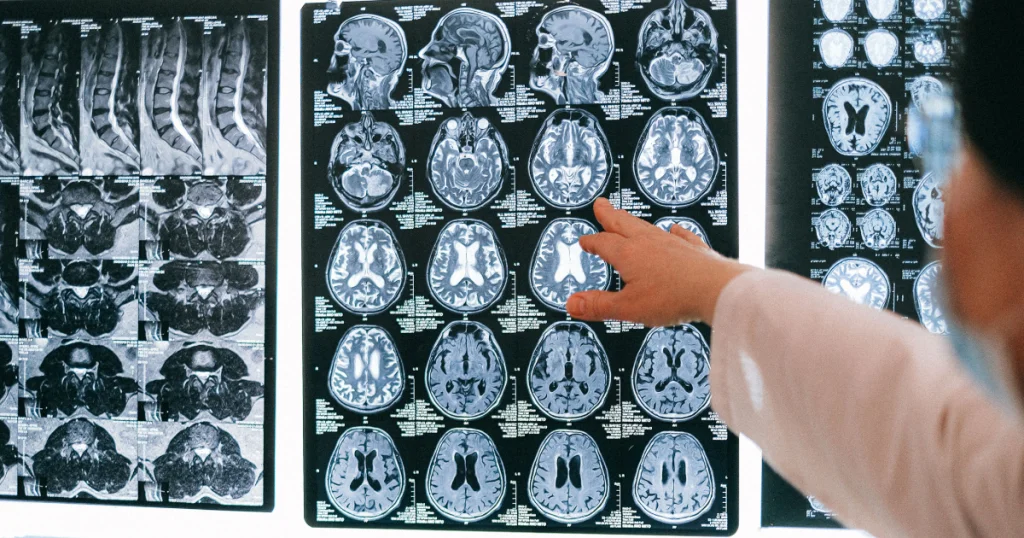

The pain of a breakup is one of the most universally human experiences and one of the most misunderstood. We tend to frame it as emotional: grief, sadness, longing. But what neuroimaging research reveals is that a breakup is also a neurological event, one that produces measurable changes in brain activity strikingly similar to what happens during drug withdrawal.
Understanding the neuroscience does not make the pain disappear. But it does make it legible. And legible pain is far easier to navigate than pain that feels random and endless.
The Neuroscience of Romantic Attachment
Helen Fisher, a biological anthropologist at Rutgers University, used fMRI imaging to study people in early romantic love. The scans showed consistent activation of the ventral tegmental area (VTA) and the caudate nucleus, the core of the brain’s reward system, the same regions active during cocaine use. Romantic love, at the neurological level, is an addiction to another person.
When the relationship ends, the brain does not immediately update. The reward pathways activated by the presence of that person continue to expect a reward. Its absence registers as a deficit. The longing, the obsessive thinking, the irresistible urge to check their social media these are withdrawal symptoms.
The Role of the Default Mode Network
Beyond the reward system, breakups activate the default mode network (DMN), the brain’s narrative self-referential system, active during rumination and self-reflection. This is why breakup thoughts are so persistent and intrusive. The brain keeps returning to the relationship, running it through different scenarios, searching for understanding, searching for a resolution that never comes.
Research published in the Journal of Neurophysiology found that viewing a photo of an ex-partner activated the same neural regions associated with craving in cocaine addiction. The obsessive thinking is not a character flaw; it is the brain’s reward system in an extended state of craving.
Physical Pain Is Real
Naomi Eisenberger’s research at UCLA showed that social rejection activates the same brain regions as physical pain, specifically the dorsal anterior cingulate cortex and the anterior insula. This is why people describe heartbreak as literally painful. The phrase is more accurate than it sounds. The brain processes relational loss through the same neural hardware as bodily injury.
The Stages of Neurological Recovery
Recovery follows a somewhat predictable neurological trajectory, even if it does not feel that way from the inside.
Weeks 1-4: Acute Withdrawal
Craving is highest. Intrusive thoughts are most frequent. Physical symptoms (sleep disruption, appetite changes, heightened stress hormones) are most pronounced. This is the hardest phase and also the most time-limited.
Months 1-3: Recalibration
The reward system begins to reduce its expectation of the ex-partner as a source of dopamine. Rumination decreases gradually. New experiences and social connection help accelerate this recalibration.
Months 3-6+: Integration
Neuroplasticity allows the brain to form new associations, new reward pathways, and new narratives. The goal is not to forget the relationship but to integrate it into a story that allows forward movement.
What Actually Helps
Given the neurological picture, certain interventions have a stronger evidence base than others. No-contact periods help reduce cue-induced craving (like an alcoholic avoiding bars). Physical exercise increases dopamine and serotonin, partially compensating for the deficit. Social connection activates the bonding circuits that the relationship had monopolized. Narrative work, journaling, and therapy help the DMN construct a coherent story rather than cycling through fragments.
What does not help: checking their social media (maintains the craving cycle), idealizing the relationship (prevents accurate memory consolidation), or rushing into a replacement relationship before neurological recalibration has occurred.
How Relatio Can Help
Relatio’s reconnection and emotional recovery program is designed around exactly this neurological process. Guided daily practices help regulate the stress response, structured reflection exercises support healthy narrative integration, and AI coaching provides support during the moments when the craving is hardest to resist. You do not have to navigate the withdrawal alone.